The scale of work is part of the piece’s industrial record. The programme totals more than 40,000 hours and unfolds over three years, with a Bespoke team dedicated to integrating techniques and materials ranging from metal and wood to leather, paint, and embroidery into a continuous composition. The project begins with research that distils the model’s history into 77 hand-drawn motifs, later applied across multiple vehicle surfaces as a system of discreet nods. In terms of material culture, the result reads closer to a work of applied craftsmanship than to a conventional limited edition: the content is not in a numbered plaque, but in the density of references.
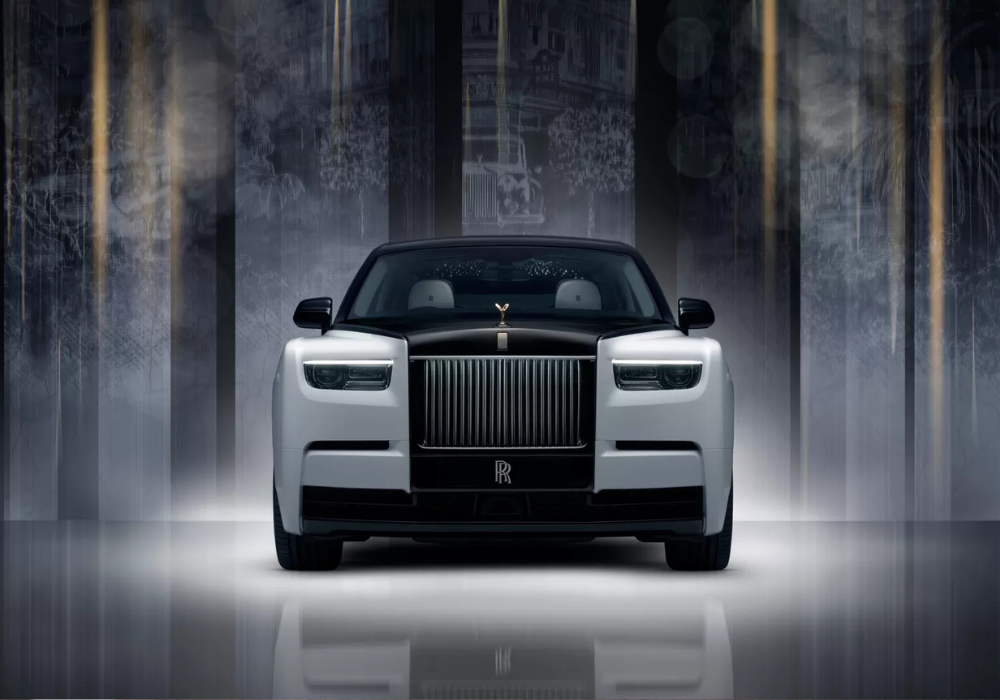
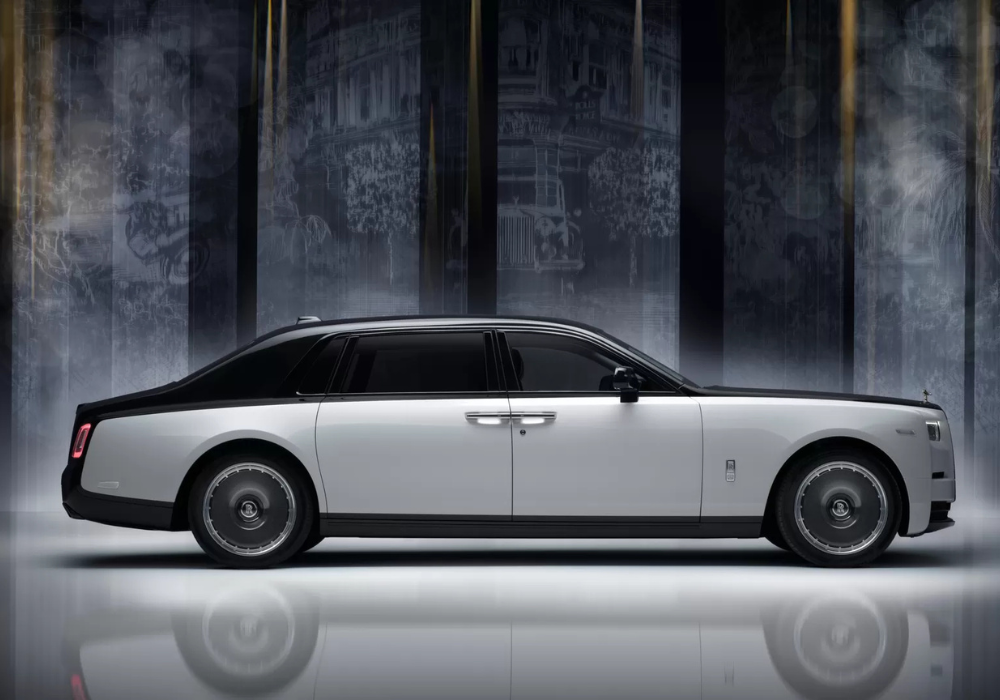
On the exterior, the centenary theme is expressed through a deliberate colour grammar and an explicit use of precious metals. The car adopts a two-tone finish combining white and black, plus a paint treatment with “champagne” effect particles designed to emphasise depth and lustre under different light conditions. The Spirit of Ecstasy is reimagined in solid 24-carat gold, accompanied by “RR” emblems also executed in gold with white enamel. The detail continues onto the wheels: each rim carries 25 engravings, adding up to 100 lines as a direct reference to 100 years of the Phantom name.
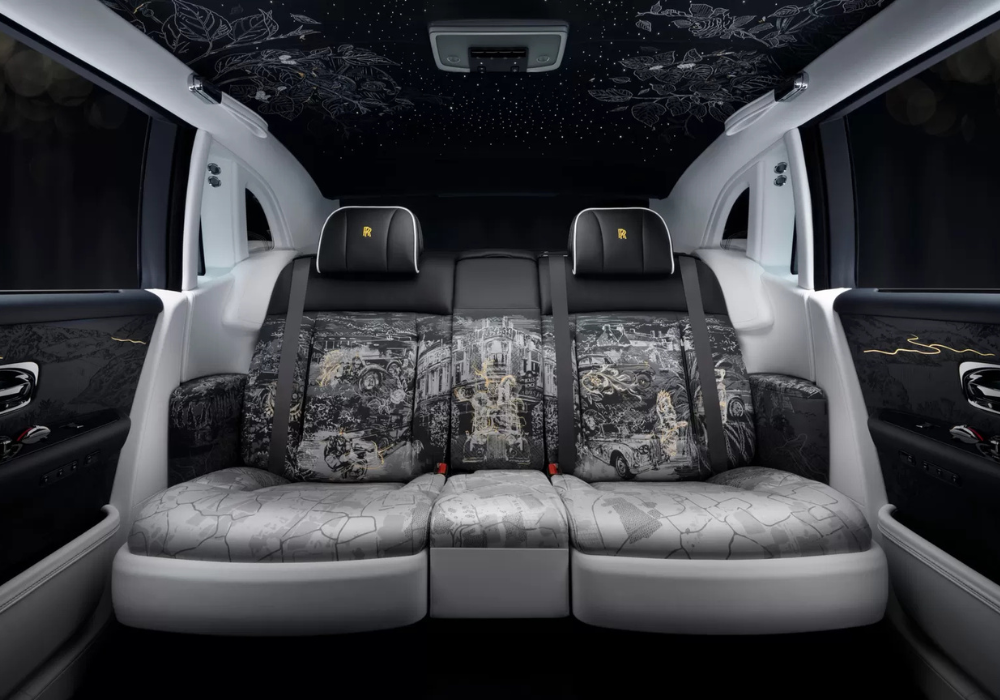 The interior concentrates the most narrative work. Upholstery stages a dialogue between fabric and leather that echoes historical configurations of the model, building the story in layers: printed backgrounds, imagery, and embroidery depicting owners and episodes associated with different eras of the Phantom. In numbers, the set exceeds 160,000 stitches spread across dozens of panels, following a twelve-month development with a fashion atelier, a detail that places the execution firmly in the realm of high craftsmanship. The central element of the dashboard is called the Anthology Gallery: a sculpture made from 3D-printed aluminium fins assembled like pages, with brushed surfaces designed to create dynamic light effects.
Cabinetry adds another layer of complexity. The doors feature marquetry surfaces and maps executed with gold leaf, engraving, and relief techniques that depict places associated with Henry Royce and key journeys in the model’s history, forming a symbolic cartography best read up close. The iconography continues in the starlight headliner, where the stitch work multiplies to form scenes and symbols linked to Phantom history, integrated into a visual narrative that does not rely on screens or digital effects. The sum of these elements follows a clear idea: the centenary is marked through workshop language, not through a styling package.
 Even the mechanical side is folded into the material narrative. The 6.75-litre twin-turbo V12 retains its power and torque figures, but gains a white engine cover with 24-carat gold detailing, an unusual gesture in a contemporary engine bay and consistent with the car’s collector-piece approach. The final price of these cars is not published; in the luxury ecosystem, that absence is common when value depends on a level of personalisation and workshop hours that does not fit a standard configurator.
The Luxury Trends Magazie ( Revista de Lujo – Luxury Magazine) ©Rolls-Royce Motor Cars images