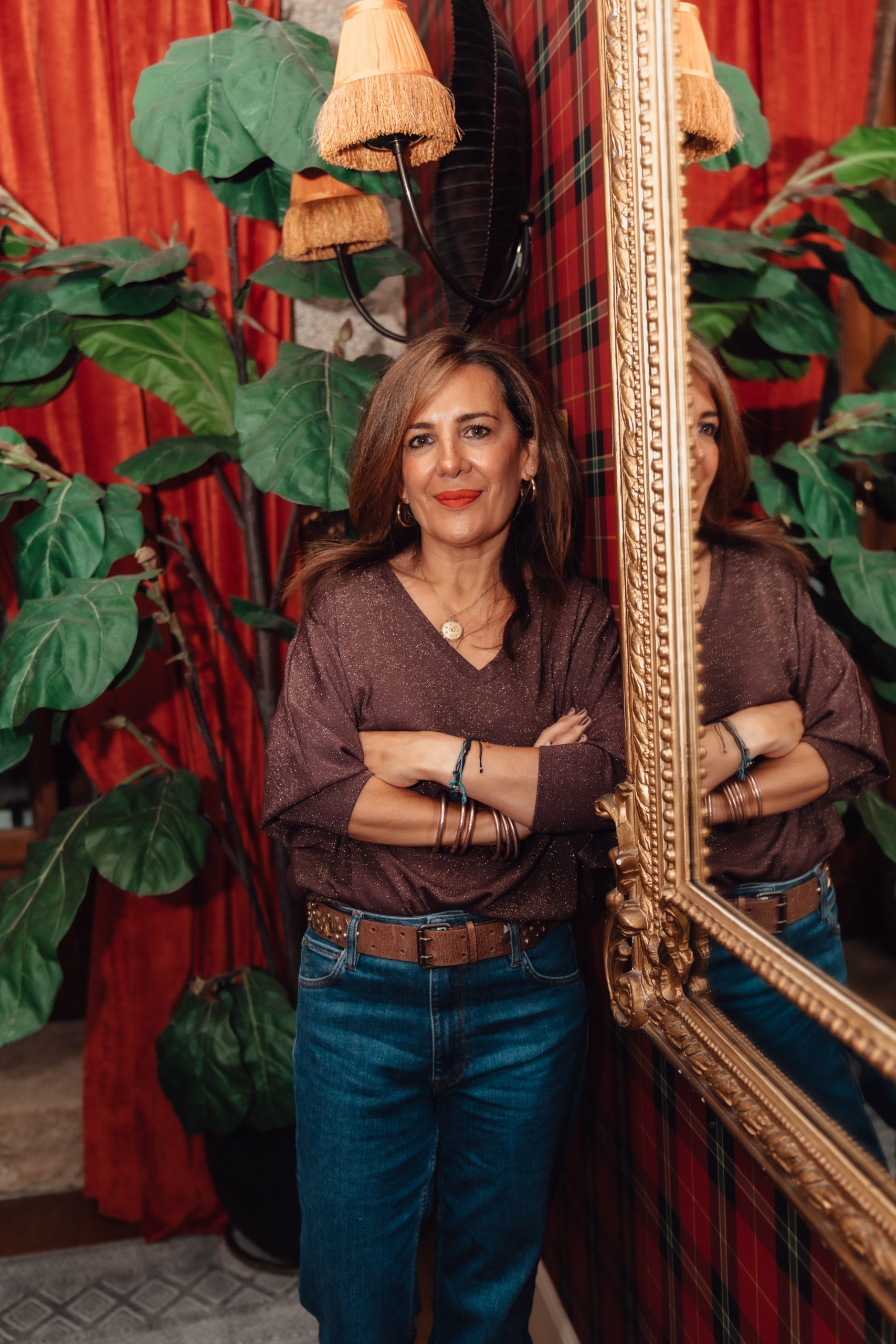
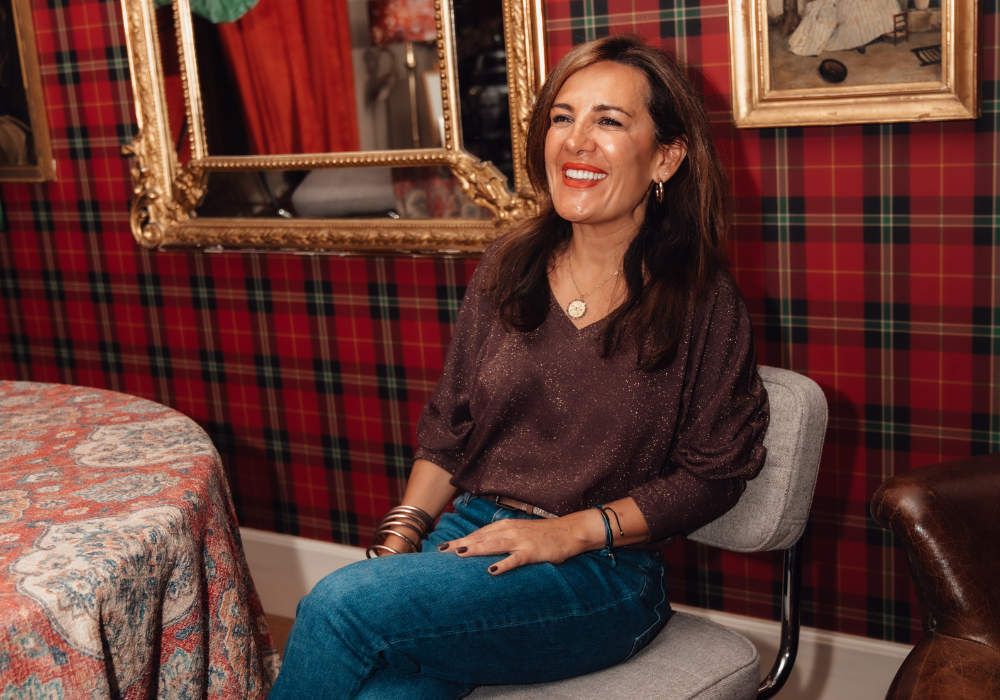
Luisa Lorenzo García is a businesswoman, Chief Executive Officer of her family-owned companies, and General Manager of the Relais & Châteaux Hotel Spa A Quinta da Auga, one of Spain’s leading luxury hospitality landmarks, located in Santiago de Compostela.
She holds a degree in International Administration and has completed studies in Hotel and Restaurant Management at Cornell University. With more than two decades at the helm of her family’s project, she brings extensive leadership experience to the business. She is currently pursuing a degree in Psychology, further deepening her interest in human development and conscious leadership.
Her vision of hospitality blends excellence and authenticity with a strong humanistic dimension, understanding luxury as an emotional experience deeply connected to people and place.
What does luxury mean to you?
Today, in a fast-paced, technological, and immediate world, luxury is what is crafted slowly: craftsmanship, care, and what is made with affection and passion. Human encounters and connections are becoming increasingly valuable, being able to look someone in the eye, listen without haste, and share a conversation without interruptions. Hospitality is about creating spaces where people feel seen, understood, and cared for. In our case, luxury also lies in the respect for the historic building, the natural surroundings, and the local producers and artisans who are part of our identity. And, of course, in calmness, which has become a true luxury.
Could you define A Quinta da Auga in one word and why?
People. We are people taking care of people. Although we are fortunate to have a magnificent 18th-century building, we often say that there are thousands of beautiful hotels around the world; what truly sets us apart is the value within. What distinguishes us is empathy as a way of understanding the world and the ability to put ourselves in someone else’s shoes. The gestures that are not written in manuals, accompanying, caring, surprising, are the ones that truly create lasting memories.
How did the idea of founding A Quinta da Auga come about?
The building came into my family’s possession through a public auction. Once the property was acquired and I joined the project, we began reflecting on what to do with it. We felt that Santiago lacked a hotel where luxury resided in the details, the atmosphere, and the gastronomy. We were inspired by the Relais & Châteaux philosophy, where luxury is not ostentation, but soul, intention, and authenticity. The idea was to create a space where the experience is built from the small things and genuine care.
What values do you consider essential to lead a high-end hotel?
Humanity, warmth, and passion. Above all, we are people, and the approach must be close and sincere. Alongside this come excellence and high standards, always grounded in teamwork. A hotel is like a clock: every piece is essential for everything to function. In the high-end segment, detail is not an addition; it is the language through which care and the ability to surprise are expressed.
What continues to inspire you after so many years?
I am still inspired by constant improvement and by never settling. Evolving each year without losing the essence of the project. I am motivated by setting new challenges and creating new ventures, such as the recent acquisition of Pazo do Cotón, which allows us to continue growing with coherence. But above all, I am inspired by meeting very different people, engaging in conversation, learning from them, and building genuine connections. And, of course, when guests choose to return; that means we have created something more than just a stay.
Is AI compatible with luxury?
Yes, if it serves people. We use it to eliminate tasks that add no value to either the guest or the team, particularly administrative and repetitive processes. If technology helps simplify operations and frees up time to focus on what truly matters, attention and human connection, then it is not only compatible with luxury, but a powerful ally.
What does today’s high-end guest expect?
Above all, authenticity rooted in the territory. In an increasingly global and homogeneous world, the high-end traveler wants to experience something that cannot be replicated in another destination. They seek identity, culture, landscape, gastronomy, and truth. Luxury is no longer measured solely by material standards, but by the ability to connect with the essence of a place. That is why preserving what is genuine is so important.
Will personalization continue to be luxury’s main challenge?
More than personalization itself, I believe the real challenge will continue to be authenticity and sensitivity. Personalization matters, but not as an algorithm, rather as a genuine ability to understand the person in front of you. It is not only about adapting a service, but about anticipating and truly connecting. The luxury of disconnection will, in reality, be human connection, and that is where true differentiation will lie.
What place has influenced your vision of luxury?
I have learned a great deal through travel, both from places where luxury felt empty and from simple destinations that moved me deeply. Impeccable spaces without emotion have helped me understand what I do not want luxury to be. For me, luxury is what has soul, what connects with you, and what leaves a lasting imprint beyond the material.
Where do you think of when you travel for pleasure?
I often think of Brazil, a country that deeply marked me, as well as Mexico and many authentic territories yet to be discovered. But of course, I think of Galicia and the peace this land brings me. For me, luxury can be something as simple as sailing at sunset along the estuary, enjoying mussels or oysters in a humble harbor with a good glass of white wine. That is luxury.
Do you have any hobbies?
Traveling is one of them, as discovering new cultures deeply inspires me. I am also passionate about gastronomy and the world of wine. I love music, cinema, and sailing, which is a true form of disconnection. I practice sports, have an interest in interior design, and read about personal development and psychology. In fact, I began studying Psychology out of both interest and vocation, in order to better understand people.
A book that has marked you?
Reinvent Yourself by Mario Alonso Puig. I read it at a particularly demanding moment, during the 2008 crisis, when we opened the hotel and my first child was born. It marked the beginning of a path of personal development. It helped me understand that personal evolution is possible when the right environment and tools are in place. Since then, I have been a firm believer in human development.
What advice would you give to someone who wants to lead hospitality projects?
It depends on the type of project one wishes to lead, as no two are the same. It is essential to understand the priorities at each moment and to recognize that they may change over time. I would recommend always going to the root of problems, listening deeply, adapting, and never ceasing to learn. Leadership requires constant evolution.
-The Luxury Trends Magazine (Revista de Lujo – Luxury Magazine) © A Quinta Da Auga & Wearecanela Images.