Over the past decade, Doha’s transformation has positioned West Bay as one of the country’s most strategic urban hubs: a district shaped by skyscrapers, corporate headquarters, diplomatic representations, and new layers of cultural infrastructure and leisure. Within this landscape, the Waldorf Astoria operates as the synthesis of two parallel dynamics: Doha’s consolidation as a destination for business events and international gatherings, and the growth of high-value tourism associated with structured experiences that emphasize privacy, efficiency, and reliability.
The hotel’s presence within the diplomatic quarter translates into strong connectivity with the city’s main nodes: quick access to financial districts, convention centers, embassy areas, and key commercial corridors that concentrate international demand. This proximity supports a hybrid stay model, business and leisure, particularly common in Doha, where corporate schedules intersect with cultural and sporting calendars, and where weekends often shift travel toward beaches, museums, or dining. In a market where differentiation is increasingly technical, location becomes an operational variable defined by transfer times, scheduling flexibility, ease of meetings, and above all, service predictability.
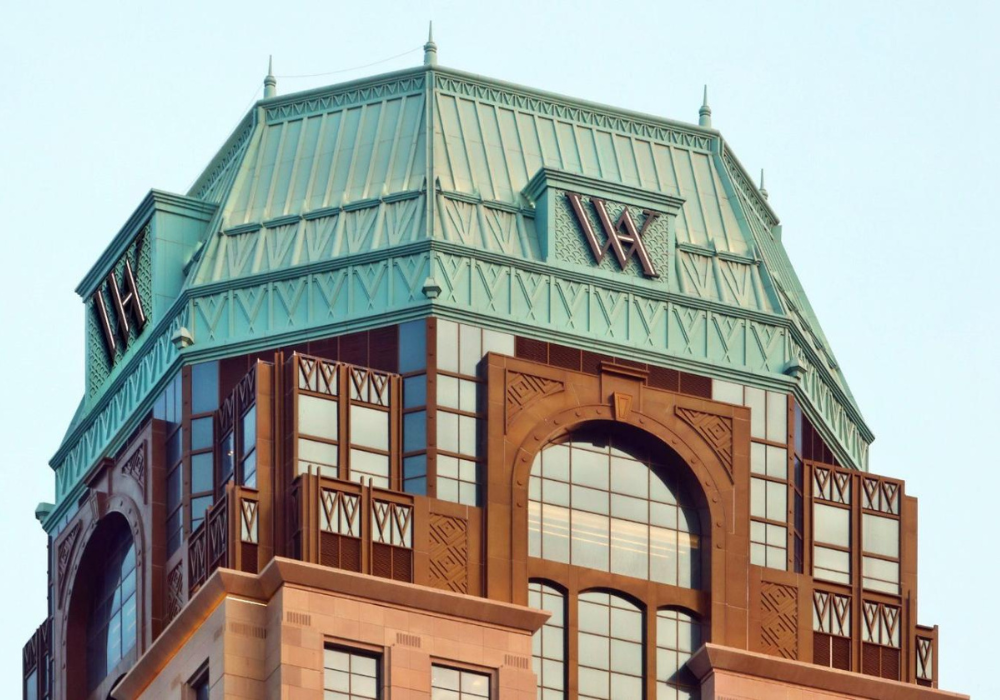
From an architectural perspective, the building adopts a tower typology typical of West Bay, directed toward resolving a core challenge of premium hospitality: spatial efficiency without compromising privacy. Verticality enables open views, clear circulation, and a segmentation of functions that organizes the guest experience. In a destination accustomed to large-scale developments and mixed-use programs, the hotel functions as an integrated system in which rooms, residences, dining, wellness, and events are connected through an internal logic that minimizes friction and supports continuity throughout the stay.
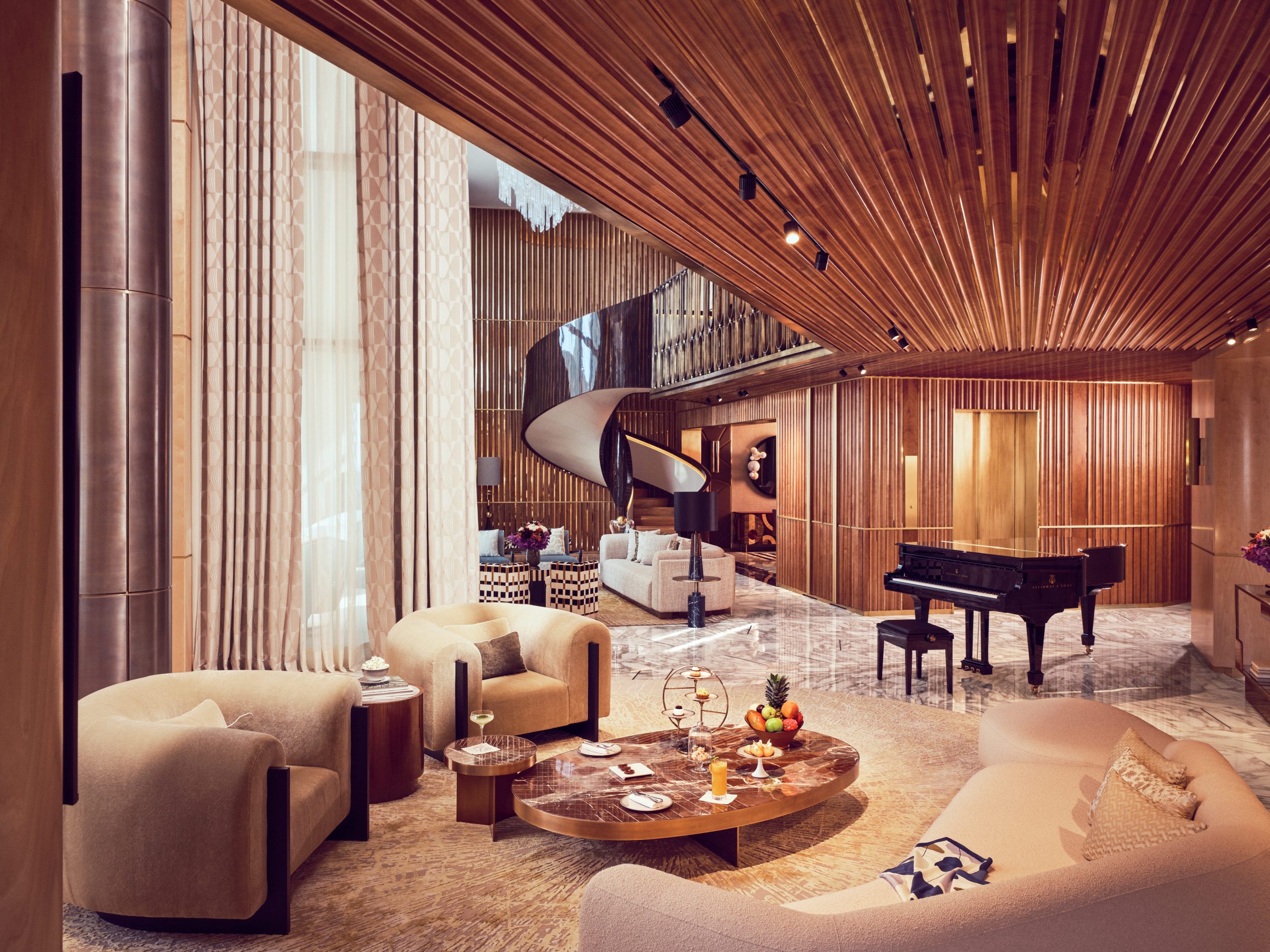
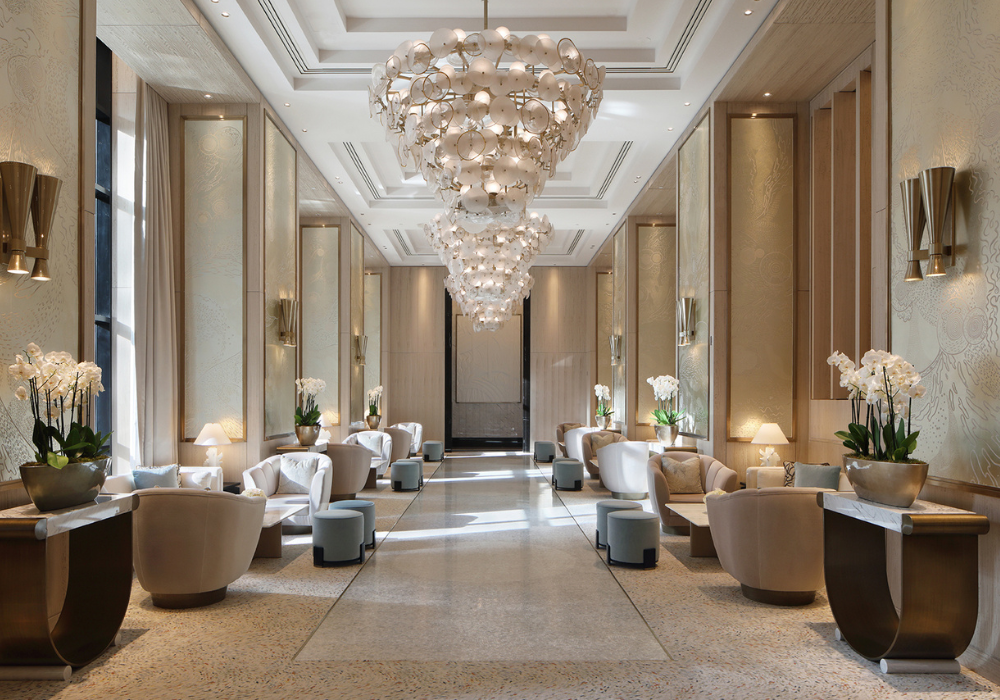
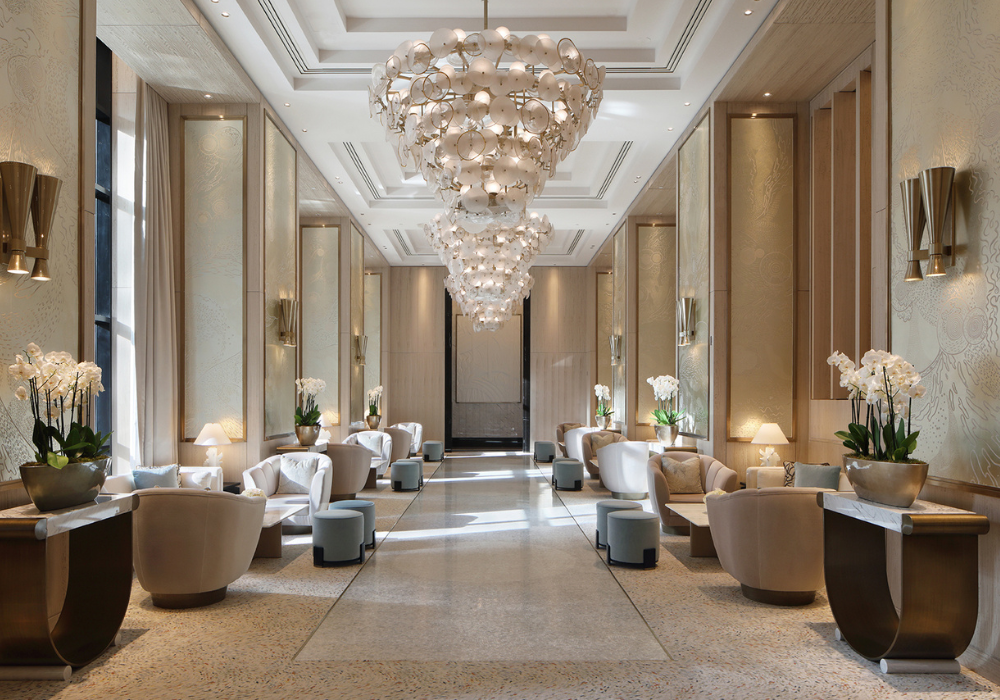
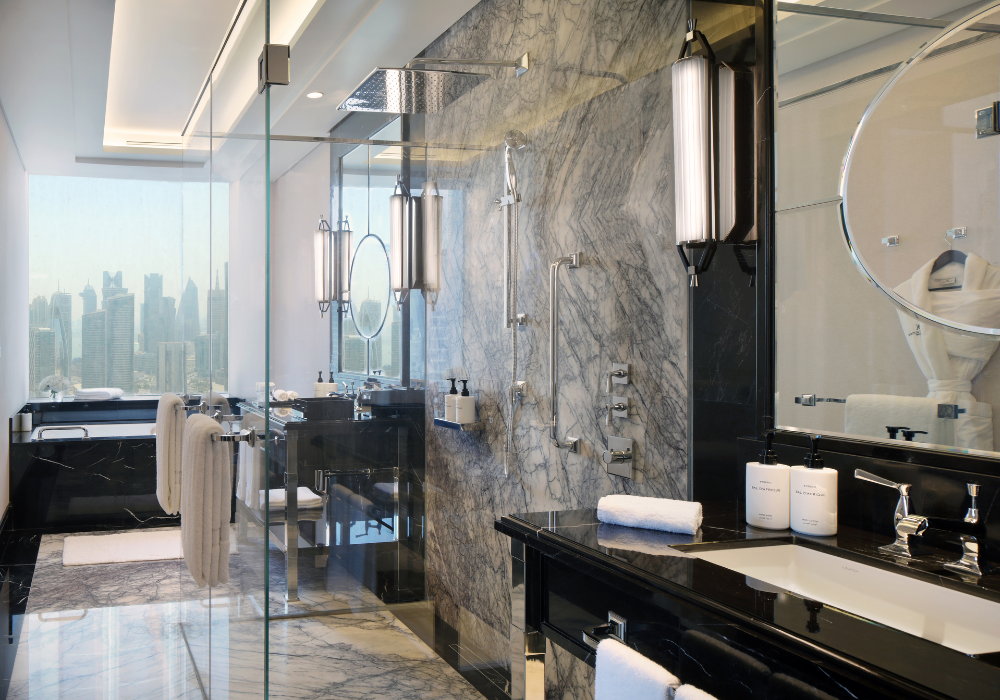
This continuity is reinforced through interior design conceived around restrained materials, stone, wood, high-density textiles, and lighting that prioritizes clarity. Rather than aiming to impress, the intent is to create an atmosphere of operational calm: intuitive wayfinding, smooth transitions between public and private areas, and legible spatial organization. In contemporary luxury hospitality, where guests seek control over their environment, interior design becomes a functional tool that allows movement to feel natural and service to remain discreet.
In terms of accommodation, the property offers a composition of 283 rooms, along with suites and apartments, addressing a range of guest profiles: short stays driven by corporate agendas, couple-oriented leisure travel, and longer residencies requiring domestic rhythms and equipment. This diversity of typologies is often decisive in markets such as Doha, where demand fluctuates with seasons, trade fairs, summits, and major international events. From an experiential standpoint, the focus remains on acoustic comfort, rest, integrated technology, and layouts that support work without encroaching on leisure.
Brand tradition is expressed most clearly through the human element. The hotel operates on a service model that combines international chain standards with personalization, with specific mechanisms playing a central role: butler service and concierge as layers of mediation between the guest and the city. In a destination characterized by a high density of diplomatic, corporate, and cultural protocols, the concierge function assumes a logistical dimension, managing schedules, transfers, reservations, and last-minute needs, while curating experiences with discernment.
The culinary offering is another area in which Doha has raised expectations. At the Waldorf Astoria Doha West Bay, dining is conceived as a collection of restaurants and bars that allow guests to explore different culinary registers without leaving the property. Beyond the number of venues, the decisive factor lies in the operational approach: coordination between kitchen and dining room, product consistency, extended hours, and the capacity to host both business dinners and informal meals.
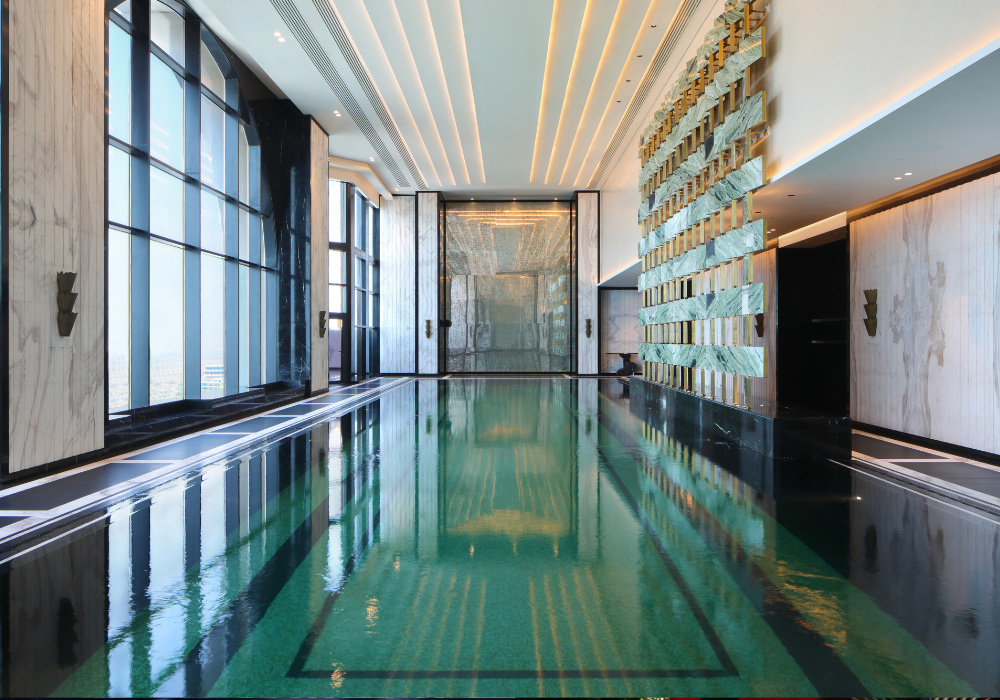
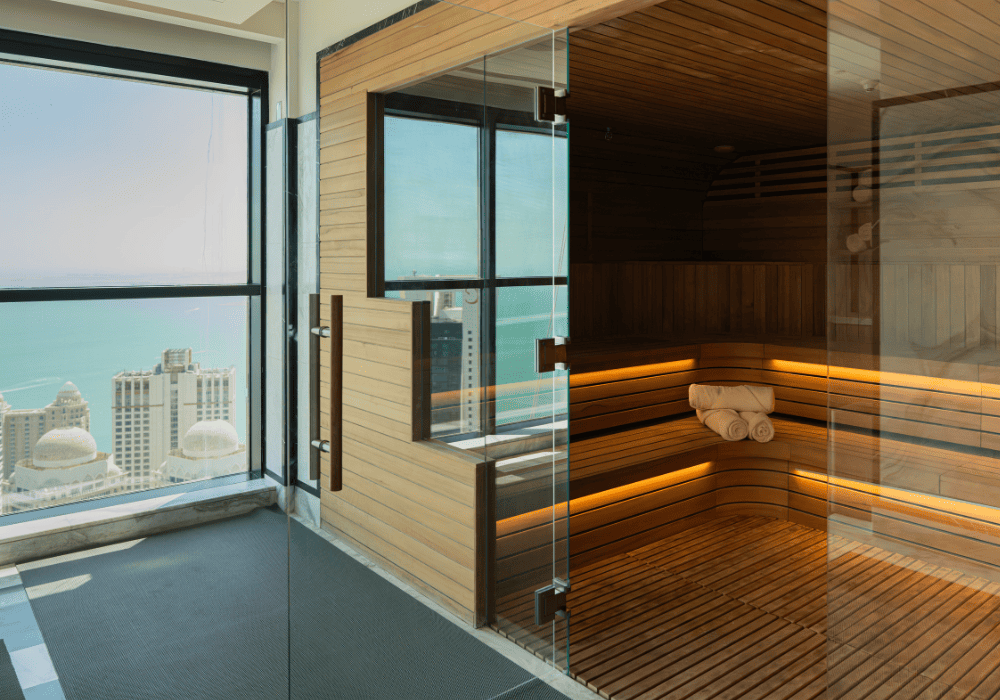
The same integrated logic is evident in wellness. The hotel features a spa and a program oriented toward wellness, understood both as infrastructure and as a pattern of stay: treatment rooms, rest areas, and circuits incorporating hydrotherapy. In parallel, the fitness area meets the expectations of travelers who maintain routines while away, aligning with long workdays or time-zone changes.
Meetings and celebrations are especially significant in today’s Doha. Qatar has strengthened its positioning as a host of corporate encounters and international summits, requiring hotels capable of operating to MICE standards without diluting a premium experience. Within this framework, event spaces and modular ballrooms, audiovisual support, banquet teams, and technical coordination function as natural extensions of the product.
All of the above sits within a national strategy that combines infrastructure, culture, and air connectivity. Expanded visitor services and international links have helped Doha consolidate as both a stopover and a destination, directly affecting the landscape of luxury hospitality. In this scenario, the Waldorf Astoria Doha West Bay stands as a representative case of how an international brand integrates into a market with high expectations through standardization, training, and the ability to deliver coherent experiences across multiple guest segments.
The hotel’s international reading is also supported by industry signals. In 2025, sector recognitions linked to Qatar Tourism placed the property in categories related to new openings, providing an indicator of visibility within the local tourism ecosystem. Such mentions do not replace guest experience, but they help contextualize the competitive level of the market and the institutional interest in projecting measurable standards.
Overall, the Waldorf Astoria Doha West Bay positions itself as an asset that reflects Qatar’s current stage as a destination: an era in which luxury is measured less by ornament and more by verifiable factors. A strategic district location, functional architecture, comfort-led interiors, continuously trained staff, internationally oriented dining, wellness as infrastructure, and events as an extension of the business proposition. Within the landscape of luxury hotels in Qatar, this combination contributes to consolidating an offer aligned with global expectations and to reinforcing Doha’s role as a relevant hub in the Middle East’s premium hospitality map.
The Luxury Trends (Revista de Lujo – Luxury Magazine) © Waldorf Astoria images.