The British maison Burberry takes seasonal control of Bloomingdale’s with a technological and creative intervention featuring a monumental LED “scarf,” thematic window displays and an exclusive product selection. The activation positions the house at the center of New York’s festive season and strengthens Burberry’s global strategy to reinforce its cultural and commercial presence.
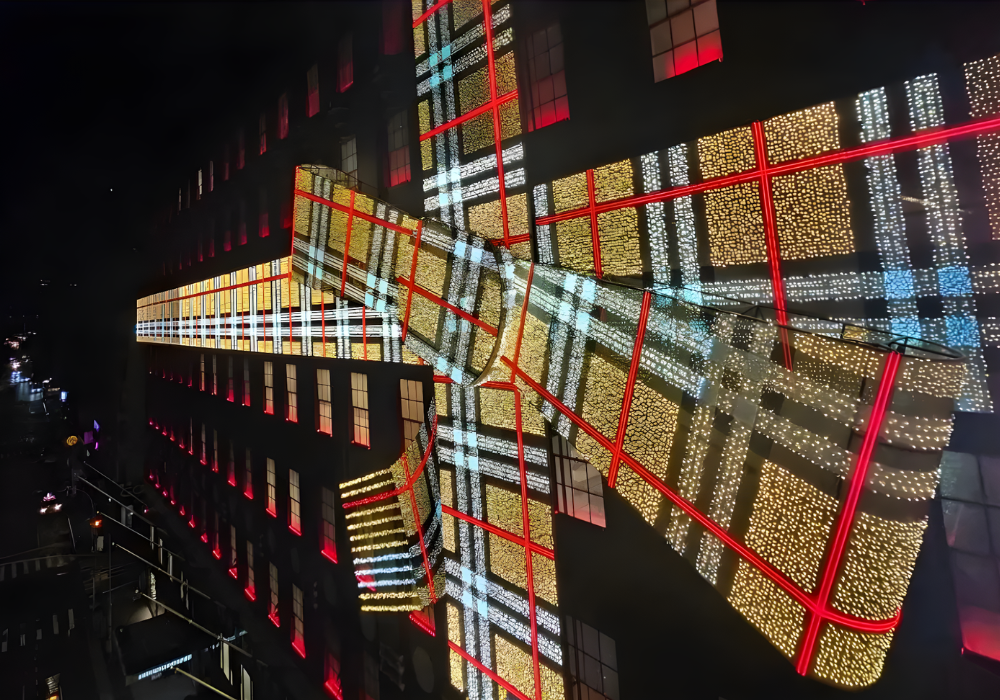
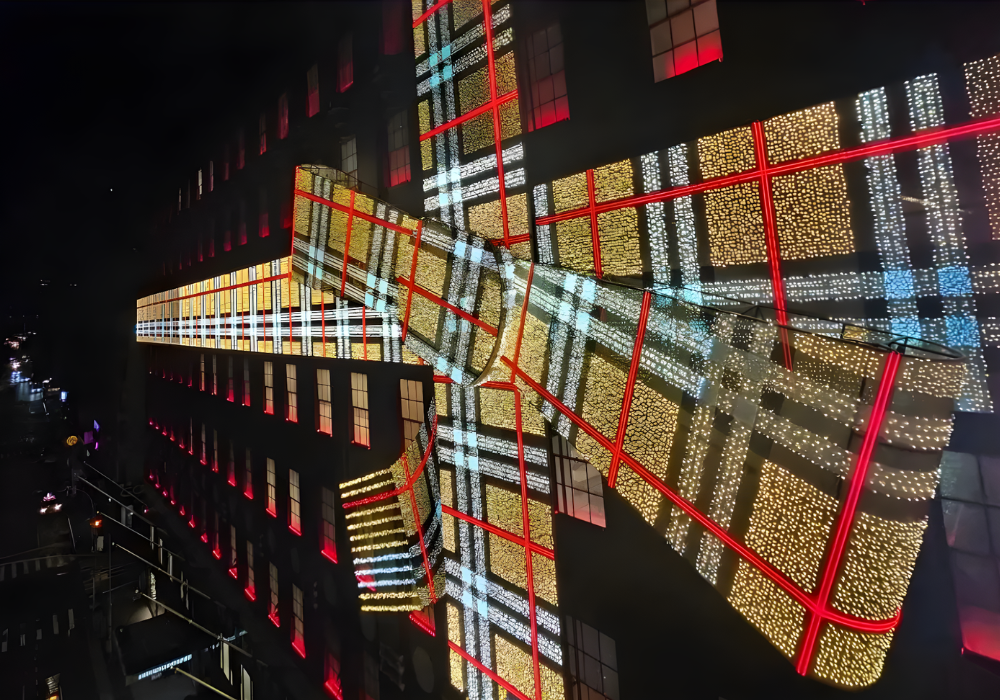
Burberry’s recent takeover of the historic Bloomingdale’s flagship on Lexington Avenue has quickly become one of the most discussed interventions of the holiday period. The building’s main façade, wrapped in an imposing digital “scarf,” introduces a narrative where technology, British heritage and contemporary creativity converge. The installation, composed of high-definition LED panels, projects visual motifs extracted from the house’s archive, reinterpretations of the Burberry Check, and dynamic sequences that interact with the flow of city traffic. The result is an ephemeral architectural gesture that redefines the holiday aesthetics of New York retail and highlights the maison’s international ambitions.
The window displays, developed in collaboration with Bloomingdale’s creative teams, adopt a scenographic approach that blends British tradition with modern sensibility. Railway miniatures evoking the English countryside, moving textile compositions, articulated figures and references to the iconic trench coat coexist in a visual narrative that expresses the maison’s identity. These scenes, conceived as micro-stories, create visual continuity with the exterior installation and elevate the building’s touristic appeal during one of the busiest periods of the year.
The intervention aligns with a broader strategy aimed at revitalizing the physical luxury experience, a central focus for maisons in a context where omnichannel engagement and narrative interaction have become essential. Burberry deploys an approach that integrates audiovisual resources, architectural gestures and a carefully curated product selection. The LED “scarf,” conceived as the project’s symbolic centerpiece, acts as an enveloping layer that illuminates, protects and identifies the building. This type of activation illustrates the global luxury sector’s shift toward creating urban landmarks capable of attracting visitors, generating digital conversation and reinforcing institutional positioning.
Inside Bloomingdale’s, a curated selection of seasonal items developed by the maison takes center stage. Limited-edition pieces, reinterpretations of the Royal Stewart tartan, winter-toned accessories and architectural versions of the trench coat form a display that merges textile technique with contemporary design. Burberry articulates a coherent visual language that echoes the exterior installation, reinforcing its narrative with controlled-quality materials, refined craftsmanship and a color palette defined by neutral tones and warm accents.

The collaboration also includes experiences designed to enhance client interaction with the brand: personalized styling sessions, editorial activities, guided window tours and special content tailored for digital platforms. This hybrid approach, combining physical presence with digital visibility, has become a hallmark of the modern luxury ecosystem. Together, Burberry and Bloomingdale’s consolidate a strategy that merges institutional heritage with consumer-behavior analysis, appealing to a global audience that values both exclusivity and the cultural dimension of retail.
From an urban perspective, the intervention represents a key milestone in New York’s holiday landscape. The city, whose identity in December is shaped by monumental installations, finds in this project a new point of attraction capable of integrating into its cultural geography. The digital “scarf” functions as a visual landmark, reshaping the streetscape of Lexington Avenue and contributing to the area’s economic dynamism.
The activation aligns with a global trend: the transformation of window displays into experimental platforms where design, technology and narrative converge. Luxury houses increasingly rely on large-scale visual interventions to communicate cultural identity and capture public attention. Within this context, Burberry’s proposal stands out for its aesthetic precision, technological integration and its ability to reinterpret historical codes, such as the Burberry Check or the trench coat, through a contemporary lens.

The campaign also reflects a turning point for the sector, which observes how collaborations between heritage brands and major retailers acquire a central role in shaping international visibility. Bloomingdale’s, aware of the importance of maintaining relevance in a highly competitive market, finds in Burberry a partner capable of delivering identity, sophistication and cultural coherence. For the maison, the intervention serves as a strategic platform to strengthen its North American presence and consolidate a discourse that balances heritage, creativity and sensory experience.
The project will remain active throughout the festive season and is positioned as one of the most significant luxury retail moments of 2025. Its combination of technological ambition, aesthetic coherence and strategic vision sets a strong example of how maisons reinterpret their legacy while adapting to new modes of cultural engagement. With this initiative, Burberry confirms its ability to interact with the urban environment, generate large-scale visual impact and reinforce its status as an influential actor within the global luxury landscape.