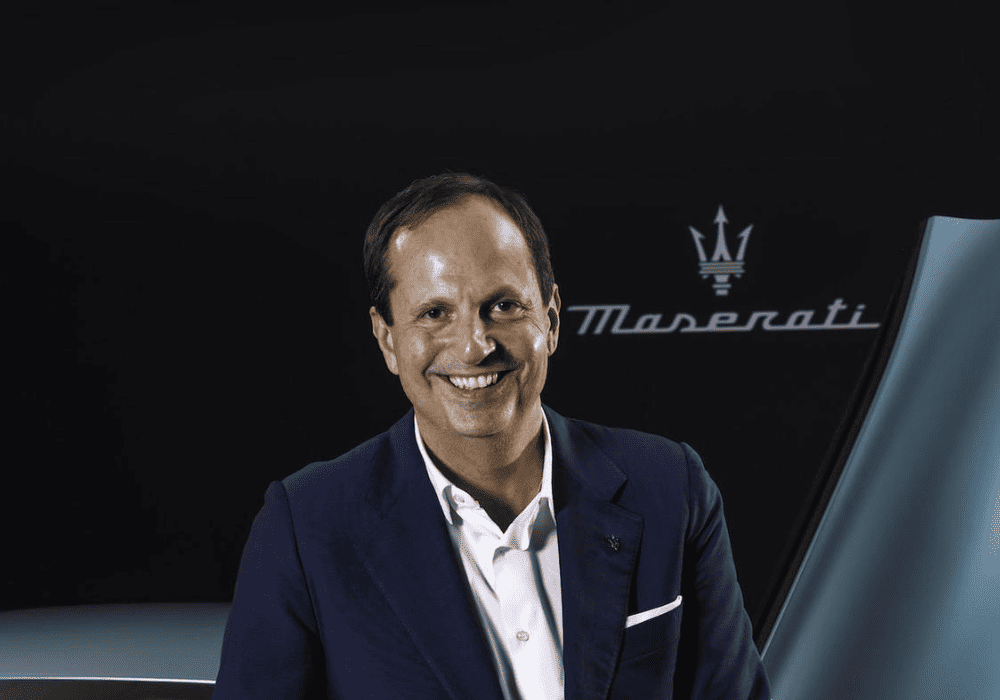
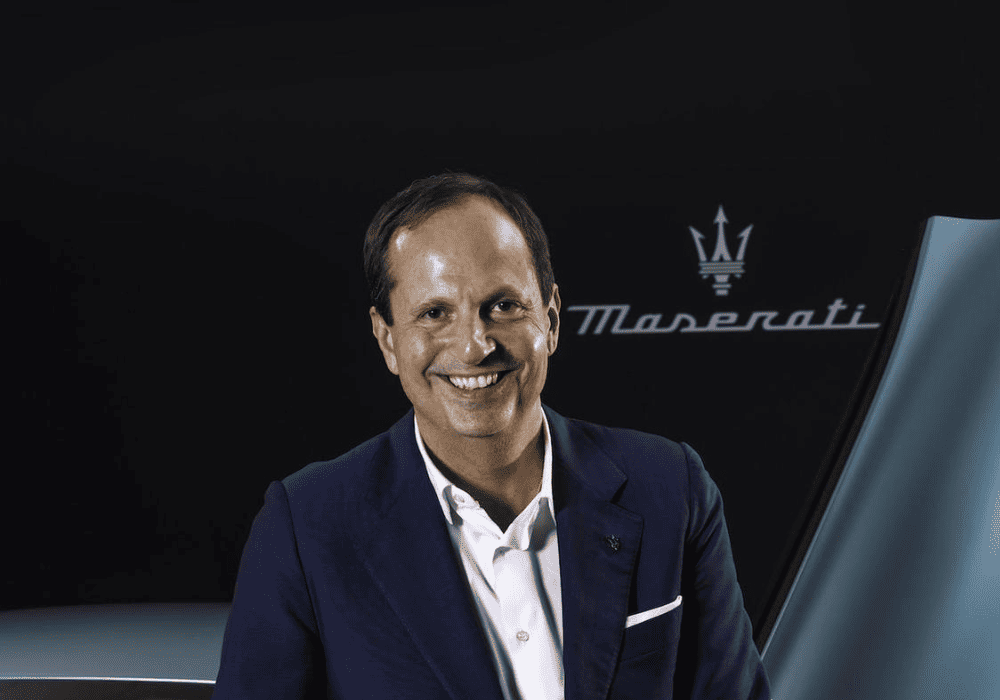
In Modena, the Italian marque has appointed Cristiano Fiorio to lead marketing with immediate effect, a move that reshapes the commercial narrative of the Trident at a symbolically significant moment in the brand’s calendar. The appointment adds to his role as CEO of Bottega Fuoriserie and signals a roadmap centered on product, heritage, and high-value services.
Fiorio’s arrival as head of marketing for the Trident brand follows his recent appointment as chief executive of Bottega Fuoriserie, the creative initiative focused on personalization, aesthetic research, and performance that connects capabilities across Alfa Romeo and Maserati. In his new position, Fiorio will report to Santo Ficili, CEO of Alfa Romeo and COO of Maserati, and will succeed Giovanni Perosino, who is leaving the company to pursue new projects.
The context matters for a brand competing in the space of luxury automotive, where value is built as much in the object as in the way it is told. Communication for a grand touring and supercar manufacturer no longer stops at catalogues and performance figures; it now integrates brand culture, the buying experience, aftersales services, and, more than ever, the ability to offer singular pieces with a strong artisanal dimension. In that logic, Fiorio’s dual responsibilities, running the personalization unit while directing marketing, suggest tighter continuity between messaging, product, and commercial execution, especially in markets where clients expect traceability, exclusivity, and consistency from showroom to content to delivery.
His executive profile offers clues to that direction. Born in Turin in 1972, Fiorio has been linked over the past 12 months to Alfa Romeo’s marketing and communications leadership, where he drove launches, campaigns, and collaborations such as those carried out with Luna Rossa and Jasmine Paolini. His trajectory within the group dates back to 2021, when he joined Alfa Romeo as head of the Formula 1 project with a mandate to maximize results and return on investment from a global marketing operation.
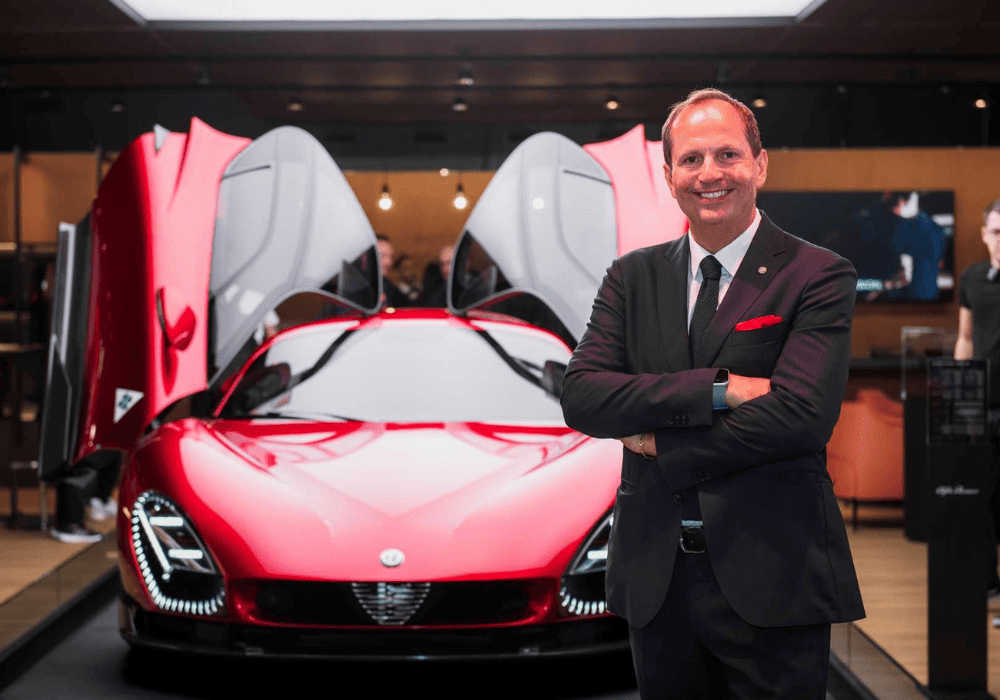
Beyond communications, his track record includes strategic project management and leadership of the 33 Stradale, a program that symbolized a return to special series and a more direct relationship with collectors after more than half a century. Corporate biography also places him within the FCA perimeter since 2013, with progressive responsibilities spanning brand communications, advertising, digital media, events, and sponsorships across several group marques, as well as leading the team that launched the Fiat 500 BEV from November 2019 onward.

For Maserati, the appointment arrives at a calendar point the company itself highlights for its symbolic weight: entry into the brand’s 111th year and preparation for the centenary of the Trident logo, scheduled for the following year. From a positioning perspective, such milestones function as narrative platforms to reinforce identity, design coherence, and historical continuity, particularly in a segment where heritage is a competitive asset. In statements attributed to Ficili, the company underlines the need to keep strengthening global positioning while acknowledging Perosino’s work in building the brand image over the past two years.
The strategic reading is also supported by product timing. In the same communications, the company enumerates models that, by nature and price point, serve as image carriers: GT2 Stradale and MCPURA in the supercar sphere; GranTurismo and GranCabrio, once again produced in Modena, as a synthesis of Italian grand touring; and Grecale as the entry point in the SUV universe with emphasis on driving dynamics. Added to this is the umbrella of Bottega Fuoriserie, with references such as MCXtrema, customization programs, the world of Corse, and Maserati Classiche, understood as a bridge between history and collecting.
In industry terms, pairing the marketing brief with the stewardship of a personalization platform aligns with a clear luxury trend: incremental value shifts toward what is singular, traceable, and “made for me.” In automotive, that movement expresses itself through low-volume configurations, exclusive palettes, special materials, limited series, and services that turn the commissioning process into part of the experience. For international clients, the difference between an aspirational purchase and a collector-grade acquisition depends on both the car and the full architecture around it: advisory, design, timelines, delivery, events, and cultural belonging.
Governance is also part of the equation. That Fiorio will report to Ficili, who concentrates responsibilities across Alfa Romeo and Maserati operations, signals a search for alignment during a period of internal reorganization, with emphasis on operational stability and growth. In statements attributed to Fiorio, he frames priorities around “returning to growth and investing” by focusing on a few fundamental elements: the brand, the Trident, the dealership catalog, and the projection of Bottega Fuoriserie as a pillar of exclusivity and continuity with collecting.
The interest in this move lies less in the org chart than in what it anticipates: a Maserati seeking to integrate product, heritage, and personalization into a single narrative better suited to competing in global luxury, where design, scarcity, and experience weigh as heavily as engineering.
The Luxury Trends (Revista de Lujo – Luxury Magazine) © Maserati images