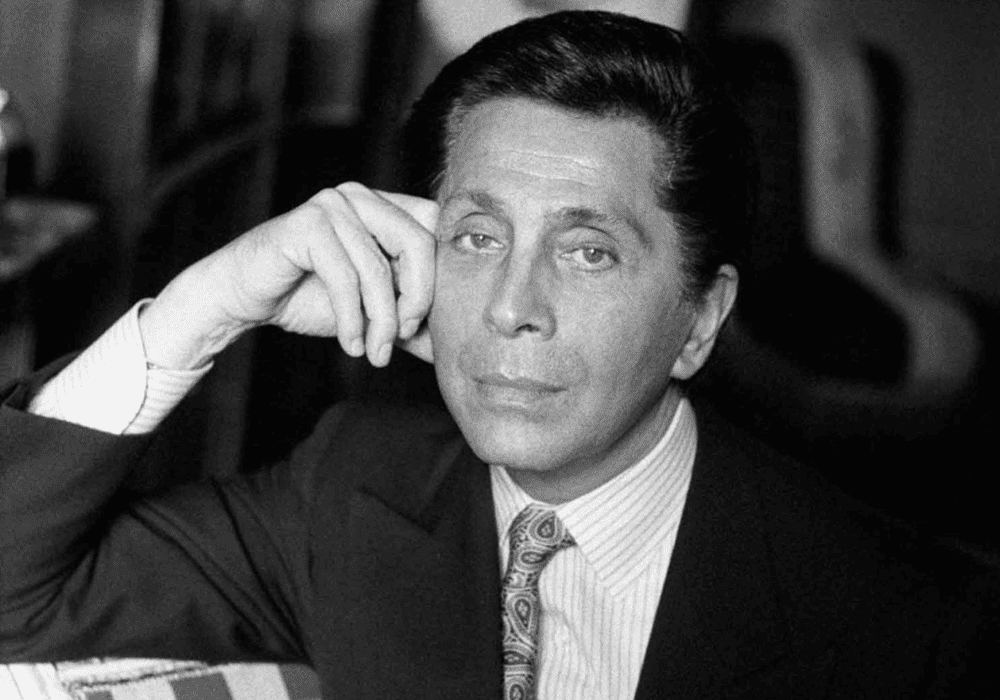
At a decisive moment for haute couture and the global map of luxury, the passing of Valentino Garavani reopens the discussion on legacy, continuity, and transformation in an industry steered by Maison Valentino, meticulous craftsmanship, and the codes of the atelier. The news frames an exercise in active memory for the house: understanding what has been built, preserving it, and projecting it forward without noise. Within this framework, the cultural impact of a creator with decades of runway practice connects archive, prêt-à-porter, and the symbolic economy of the red carpet. The profile of a figure who turned a tone into a statement, the rosso Valentino, now stands as a guide for reading a style that became a language. Across international fashion, his absence raises questions about aesthetic continuity and value construction that the brand’s own trajectory is prepared to address.

From the earliest collections, the grammar of Valentino was one of precise proportion, disciplined silhouette, and a classical reading of ornament. That combination, joining workshop discipline, millimetric fittings, and detail control, allowed a Rome-based house to consolidate a distinctive identity amid competing creative capitals. Rather than chasing attention through permanent rupture, the brand cultivated recognizable constancy: a dialogue between cut, drape, and the rhythm of cloth. This way of understanding dress aligned the house with a clientele that reads luxury as an addition of criteria, patience, and outcomes verified over time. The consequence was dual: visibility on the runway and a stable image in high-end retail, where coherence compounds cultural traction.
In visual language terms, the rosso Valentino operated as both anchor and key. It was never mere paint applied to fabric but a controlled atmosphere that organized textures, volumes, and accessories. Repeated with variations across decades, that chromatic decision shaped one of the clearest contributions to the luxury system: a brand can be recognized not only by its logotype but by the way it organizes light on cloth. The Maison turned that signal into a working criterion and from there articulated narratives around High Fashion capsules, the main line of prêt-à-porter, leather goods, and footwear, always under a careful collection architecture designed to endure beyond seasonal cycles.
The designer’s death invites a review of how a legacy is managed when the brand’s calendar continues. The answer lies in balance between archive and a present-day reading: preservation of master patterns, use of noble fabrics interpreted for current lifestyles, and a rereading of silhouettes with attention to movement and function. Continuity does not mean literal repetition; it means returning to measures, to internal construction, and to the order of assembly while translating heritage into products that meet the habits of a global audience. Within that process, the creative director synthesizes references and context, protects the house’s DNA, and explores without losing the regularity that sustains market trust.

On the cultural plane, the brand bearing Valentino’s name built a repertoire of images that accompanied social moments, ceremonies, and public scenes. The relationship between the red carpet and the house’s strategy went beyond episodic visibility; it became a tool for exposing grammars of presence on stage, where bias cuts, trains, and necklines dialogued with posture and movement. That articulation between codes of formal dressing and a meticulous studio sensibility consolidated the firm as a case study for understanding how an aesthetic converses with cultural institutions, festivals, and circles of influence.
In menswear, the house developed a distinct voice of its own, with suits privileging proportion and clarity over exaggeration. That approach translated the operative precision of the couture workshop into tailoring, showing that technical discipline can coexist with new readings of formality. The men’s offering reinforced the brand’s ecosystem not as an appendix but as an extension of a method. In accessories, the shift toward leather goods with defined structures and measured hardware consolidated lines with consistent commercial continuity, proof that visual identity does not depend solely on the star garment.
At product level, the quality criterion appears in a sequence of decisions: selection of materials, durability testing, color consistency, and the construction of linings and internal finishes. The house did not rely on grand declarations; it relied on measures that can be verified in use and in manufacturing control. That ethic of detail permeates Valentino Garavani’s legacy and explains the endurance of his archive: pieces age with stability thanks to the exactitude embedded from the start. In positioning terms, this regularity translates into a clear value promise for a demanding client who recognizes a garment as both cultural and material investment.

Institutional impact is also in view: museums, exhibitions, and study spaces now have a biographical closure that helps organize chronologies and exhibit processes. The creator’s timeline clarifies stages, from the founding impulse to withdrawal from the front row and the consolidation of a team, and offers a map for understanding how a Maison achieves longevity. In pedagogical terms, the case supports examination of the relationship between workshop method, collection direction, and seasonal planning, as well as the administration of a living archive available for rereading without losing its original coherence.
The present of Maison Valentino confirms that a solid legacy allows a brand to adapt to shifts in sensibility without disconnecting from its root. The continuity of a language is not guaranteed by repetition but by the ability to distill: identifying what remains, what must be retired, and what can be reintroduced in new keys. In that sense, the house holds a base that organizes evolution: the pattern table, the molder’s craft, the calibration of volumes, and an economy of adornment in which each element has function and proportion. This working method outlines a standard for the sector: permanence arises from method rather than noise.
The global luxury market is in a period where clarity of proposal and operational consistency are decisive. The brand that bears the Valentino name occupies a singular position built on long-term relationships with clientele, distributors, and cultural venues. The notion of clientele, more than consumer, is relevant: it implies knowledge, shared language, and mutual expectations of quality and service. The house has understood that pact as daily practice, visible in the construction of garments that, even in their spectacle, work in the reality of use, and in the offering of accessories that accompany that vision.

The conversation on sustainability also recognizes contributions from method: designing for longevity, selecting materials with discernment, perfecting atelier processes, and keeping internal traceability of components. In an industry where the pull of the ephemeral coexists with the responsibility of the durable, Valentino Garavani’s legacy offers a pragmatic guide: reduce superfluous variation, care for technique, and prioritize verification of outcomes. This approach does not equate to immobility; rather, it allows for targeted innovations that do not break the main line.
The economic dimension of the legacy translates into brand value, recognition of codes, and strength in complementary categories. A firm that sustains a coherent narrative expands its capacity to converse with intergenerational publics and diverse territories. Education of the eye plays a role here: teaching how to see the complexity behind a dress, the quality of invisible stitching, and the structure that lets a skirt breathe. When a house communicates through method, it builds an informed audience and raises the market standard.
In communication terms, the contained elegance that characterized the house also defined its discourse: the primacy of product over slogan, the consistency of image, and respect for time and contemplation. That sobriety, eschewing hyperbole, became a competitive advantage in saturated eras. The death of the designer, given its symbolic weight, might invite emphatic gestures; however, the culture of the brand favors a quiet homage: opening the archive, reordering collections, studying patterns, and allowing the pieces to speak.
Team formation adds another dimension. Knowledge transfer within an atelier demands procedures, documentation, and repeated practice. The house’s trajectory demonstrates that excellence does not reside in a single person but in the network of hands supporting the project. Continuity depends on that human infrastructure: model makers, pattern cutters, embroiderers, color specialists, and quality controllers, all aligned with an ideal of exactitude. This system, turning craft into organization, may be the most useful lesson for the industry.
Looking ahead, Maison Valentino holds the elements to maintain its position: a repertoire of proven silhouettes, a steady palette, a collection logic that combines impact pieces with essentials, and an ongoing dialogue with its public. Safeguarding the legacy requires vigilance: ensuring the rosso Valentino does not harden into an empty formula, that decoration preserves function, and that cut remains the first argument. Each season, that examination will honor the creator’s memory without locking the brand into a motionless past.
In sum, the death of Valentino Garavani closes a chapter and leaves a working map for those who continue. The house that bears his name can move forward through method: calibrate, refine, sustain. For the luxury sector, the consequence is clear: value is built by coherence over time, by the transparency of process, and by the tangible quality of the result. That legacy endures in workshops, collections, and windows, guiding an industry that measures its stature by the capacity to unite culture, technique, and order.
The Luxury Trends Magazine (Revista de Lujo, Luxury Magazine) © Valentino imágenes.